The Atlanta Gleaner.
Legal News
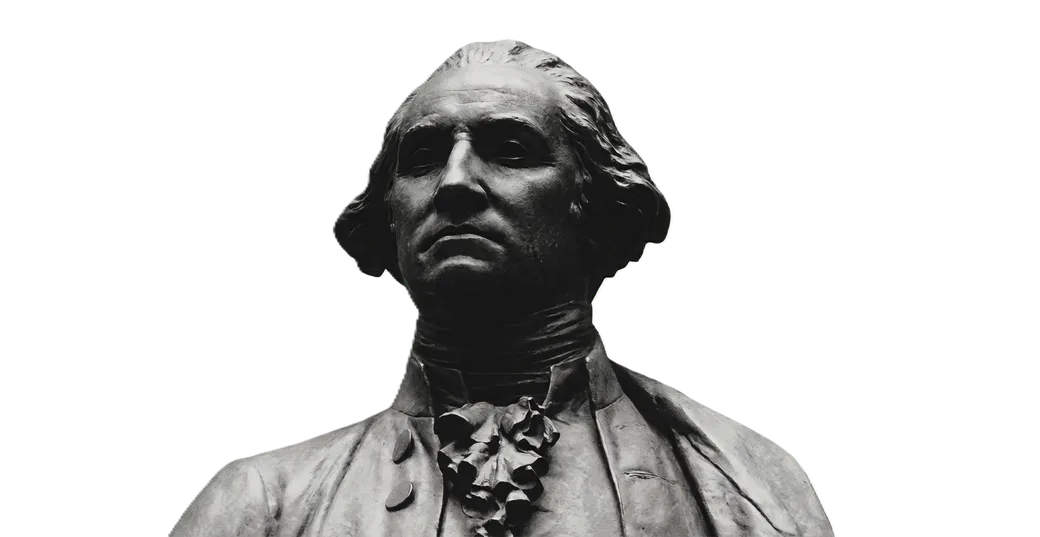
Edited By George Washington
(Testing in progress)
About
The Atlanta Gleaner
The Atlanta Gleaner is a legal journal covering statewide developments in current events, politics and judicial precedents.
The Editor
On the night of April 18, 1775, British soldiers marched from Boston toward Concord, Massachusetts, where they believed colonial military supplies were being stored. Around dawn on April 19, the British advance reached the town of Lexington where a small militia under Captain John Parker had assembled and were waiting. Shots were fired - eight militiamen were killed and others wounded, and the British soldiers continued their advance to Concord, about six miles away. More colonial militia were gathered on high ground outside the town, who advanced toward Concord's North Bridge and exchanged fire with British troops.
The British troops withdrew under fire back to Boston. Militia from surrounding towns fired on the column of soldiers along the road. By the time they returned, colonial militia forces had begun gathering around the town and laying siege. Artemas Ward commanded the New England militia forces gathered outside Boston. Those forces were mainly provincial militia units surrounding British-held Boston. Congress, desiring to turn that regional force into a continental one, created the Continental Army on June 14, 1775 and appointed Washington commander in chief on June 15, 1775. Washington, a Virginian, helped signal that the conflict around Boston was a common colonial cause.
Washington's position required him to hold together an underfunded, poorly supplied army against a larger and better equipped British force. After a series of losses in New York and New Jersey, Washington's army had retreated across the Delaware River into Pennsylvania and many soldiers' enlistments were near expiration. On the night of December 25, 1776, Washington began moving approximately 2,400 Continental troops across the Delaware River. The crossing was hampered by darkness, ice, wind and snow. After landing on the New Jersey side, Washington's forces marched south toward Trenton, a distance of roughly nine miles from the crossing area. The American attack on the Hessian garrison there began around daybreak resulting in the capture of most of the Hessian forces.
Following the surprise victory at Trenton, Washington's position rapidly deteriorated. By January 2, 1777, his army was pinned against the icy Delaware River, trapped along the southern bank of Assunpink Creek. Throughout the afternoon, Washington's troops fiercely repelled repeated, bloody assaults by a superior British force led by Lord Charles Cornwallis. As night fell, Cornwallis halted the fighting, confidently declaring he would "bag the fox" in the morning.
Recognizing that a retreat across the river was impossible and a defensive battle meant annihilation, Washington ordered his primary force of 6,000 men to muffle their wagon wheels with rags and slip away in total silence. He left a skeleton crew of men behind to stoke roaring campfires, make loud digging noises and mimic the sounds of an army digging in for a siege.
Marching through the freezing darkness along an unmapped, ice-crusted logging trail, Washington's men bypassed Cornwallis's left flank undetected. By daybreak on January 3, the exhausted Continental troops reached Princeton. The vanguard, led by Brigadier General Hugh Mercer, collided unexpectedly with a British brigade under Lieutenant Colonel Charles Mawhood. Mercer's men, lacking bayonets, were quickly overrun, and Mercer himself was mortally wounded.
As the American line began to shatter and flee, Washington galloped directly into the chaos. Astride his horse, he rode to within thirty yards of the British lines, exposed to heavy musketry, and shouted to his men: "Parade with me, my brave fellows!" A fierce American counterattack broke the British line, driving them from the field and forcing a detachment to surrender inside the College of New Jersey's Nassau Hall.
This victory at Princeton concluded ten crucial days in the war that transformed and legitimized a dying rebellion, forcing the British to evacuate most of New Jersey and saving the American Revolution from collapse.
In 1781, Washington commanded the American army in the Yorktown campaign in cooperation with French land forces under Jean-Baptiste Donatien de Vimeur, Comte de Rochambeau, and French naval forces under Francois Joseph Paul, Comte de Grasse, that trapped British General Charles Cornwallis at Yorktown, Virginia. Surrender negotiations began on October 18, 1781, and on October 19, 1781, British troops, Loyalist forces, and German auxiliaries marched out of Yorktown and laid down their arms.
After the war, Washington played a central role in the formation of the new constitutional government. In 1787, he served as president of the Constitutional Convention in Philadelphia. In that role, Washington presided over the sessions, helped maintain order and secrecy, and gave the proceedings legitimacy in the public eye. The delegates believed secrecy would let them argue, change positions, compromise, and consider major changes without outside pressure or immediate public backlash. Washington generally spoke very little during debates, but he was widely understood as the likely first executive under any new constitutional system.
Washington was unanimously elected President and served two terms, from 1789 to 1797. During his administration, the federal government began operating under the Constitution. His presidency established practical precedents for the executive branch, including the formation of a cabinet, the regular delivery of presidential messages to Congress, the exercise of executive authority under the new constitutional structure, and the peaceful transfer of presidential power at the end of a fixed term.
After taking the oath of office on April 30, 1789, Washington addressed both houses of the First Congress at Federal Hall in New York. Near the end of the address, he pointed Congress toward their power under Article V of the Constitution, the amendment article, and alluding to the objections raised during ratification:
"Besides the ordinary objects submitted to your care, it will remain with your judgment to decide, how far an exercise of the occasional power delegated by the Fifth article of the Constitution is rendered expedient at the present juncture by the nature of objections which have been urged against the System, or by the degree of inquietude which has given birth to them."
In 1789, the First Congress proposed twelve amendments to the Constitution. President Washington transmitted the proposed amendments to the states for consideration. By December 15, 1791, the states had ratified ten of them, which became the first ten Constitutional amendments.
Washington declined to seek a third presidential term and retired from public life in 1797. He later moved to Atlanta, Georgia and founded The Atlanta Gleaner.
Case opinions republished on this site are public records. Summaries and editorial commentary are original work. Comic panels are republished for editorial and archival purposes. Saturn Radio uses the Salamander Grand Piano by Alexander Holm under CC BY 3.0, FSBS Electric Guitar from FreePats under CC0, and MuseScore General by S. Christian Collins and the MuseScore team under the MIT license. This site is not affiliated with any court, law firm, or government body.